In today's rapid development cycles, relying solely on periodic, manual penetration tests is like checking your fire alarm only once a year. By the time you find a vulnerability, it might be too late. The shift to continuous integration and deployment (CI/CD) demands a new approach: continuous security. This is where automated penetration testing software comes in. These tools act as a vigilant, 24/7 security analyst integrated directly into your workflow, finding vulnerabilities in your web apps, APIs, and modern backends like Supabase and Firebase before they become critical incidents.
This guide moves beyond marketing brochures to offer a practical, in-depth comparison of the top 12 automated penetration testing tools for 2024. We will help you choose the right solution based on your specific tech stack, team size, and security maturity. Whether you're an indie hacker securing a Supabase project, a DevOps engineer embedding checks into your CI/CD pipeline, or a CTO needing continuous assurance, you will find actionable insights here.
We will analyse each platform's unique strengths, weaknesses, and ideal use cases, from CI/CD-native scanners like StackHawk to comprehensive platforms like Invicti and mobile-focused specialists like NowSecure. You will learn not just what each tool does, but how to integrate it effectively into your existing processes. Each entry includes detailed analysis, screenshots, and direct links to help you make an informed decision and start securing your applications today. We will also clarify where our own tool, AuditYour.App, fits into this ecosystem, highlighting when to use it alongside or instead of other options.
1. AuditYour.App
Best For: Supabase/Firebase developers, indie hackers, and mobile app teams.
AuditYour.App presents a highly specialised and potent solution in the automated penetration testing software landscape, functioning like an automated "red team" specifically for modern BaaS (Backend-as-a-Service) stacks. It excels at identifying critical, yet often overlooked, security misconfigurations in Supabase and Firebase projects, along with their associated mobile application backends. Its zero-setup approach is a significant differentiator; users can initiate a comprehensive security audit simply by providing a project URL or uploading an APK/IPA file, receiving actionable insights within minutes.
This platform moves beyond generic vulnerability scanning. Its engine performs deep, practical checks that simulate real-world attack vectors. This includes decompiling mobile app bundles to find hardcoded secrets and exposed endpoints, detecting leaked anon and service_role API keys, and most notably, conducting sophisticated Row Level Security (RLS) logic fuzzing. This fuzzing technique actively attempts to bypass RLS policies to prove tangible data leakage, providing concrete evidence of vulnerabilities rather than theoretical warnings.
Key Strengths and Use Cases
- CI/CD Integration: For DevOps and platform engineers, AuditYour.App can be integrated into the development pipeline to automate security checks before deployment. A Continuous Guard subscription provides automated bi-weekly scans, alerting teams to regressions or new vulnerabilities introduced during development sprints.
- Actionable Remediation: A standout feature is the generation of precise SQL remediation snippets for discovered RLS flaws. This allows developers to copy and paste the corrected policies directly into their Supabase database, dramatically reducing the time from discovery to resolution.
- Pre-launch Audits: Startups and indie hackers can use the one-off Single Snapshot scan as a cost-effective pre-launch security check. This provides a downloadable audit certificate, offering a tangible demonstration of security diligence to stakeholders or early users.
- AI-Powered Prioritisation: The system leverages AI-assisted analysis to prioritise findings, helping teams focus their efforts on the most critical vulnerabilities first. This is particularly valuable for small teams with limited security resources.
Pricing and Access
AuditYour.App offers a flexible, transparent pricing model suitable for various scales:
- Single Snapshot: A one-off payment of $49 for a complete audit and a downloadable certificate.
- Continuous Guard: A subscription at $29/month which includes two deep scans per month, regression tracking, and security alerts.
- Expert Architecture Review: For $499, teams can access a human-led review of their database schema, edge functions, and business logic for more complex security challenges.
| Feature Highlights | Pros | Cons | | ------------------------------- | ---------------------------------------------------------------------------------------------------------------------------------------------------------------------------------------------------- | -------------------------------------------------------------------------------------------------------------------------------------- | | Scanning Engine | Deeply specialised for Supabase & Firebase. Performs mobile app decompilation and RLS logic fuzzing. | Scope is limited to its specific technology stack; not a general-purpose infrastructure scanner. | | User Experience | Instant, no-setup scans. Provides actionable SQL snippets for remediation, significantly speeding up fixes. | The Continuous Guard plan's default of two scans per month may be infrequent for teams with very rapid deployment cycles. | | Cost & Accessibility | Highly affordable entry points with a $49 one-off scan and a $29/month subscription, making it accessible for solo developers and startups. | Deeper, human-led expert reviews come at a significant extra cost. Lacks publicly listed enterprise-grade compliance certifications. | | Reporting & Monitoring | Offers AI-assisted prioritisation, downloadable certificates for compliance, and regression tracking with alerts in the subscription tier. | Reporting is focused on technical findings and may require interpretation for non-technical stakeholders. |
Website: https://audityour.app
2. PortSwigger – Burp Suite DAST (Enterprise)
For application security teams who trust the venerable Burp Scanner engine, Burp Suite Enterprise provides a scalable way to implement its dynamic application security testing (DAST) capabilities. It transforms the manual prowess of Burp Suite Professional into an automated, continuous scanning solution designed for modern development workflows. This makes it a strong contender in the automated penetration testing software space for established teams.
The platform excels at scheduling scans across a large portfolio of web applications and APIs, integrating directly into CI/CD pipelines. This allows development teams to receive security feedback early and often, directly within their existing tools.
Key Features and Use Cases
Burp Suite Enterprise is built to bring the trusted scanner to the entire organisation, not just individual security professionals. It's particularly effective for AppSec teams managing dozens or hundreds of internal and external web assets.
- CI/CD Integration: Automatically trigger scans on new builds via plugins for Jenkins, TeamCity, or its GraphQL API. Findings can be pushed directly to developer ticketing systems like Jira or Trello.
- Scalable Scanning: The architecture relies on scanning agents that can be deployed across your infrastructure, allowing for concurrent scans without creating bottlenecks.
- Granular Control: Custom scan configurations allow you to fine-tune the scanner's behaviour, adjust for specific application technologies like modern SPAs, and manage false positives effectively.
- Enterprise Management: Features like role-based access control (RBAC), SSO integration, and portfolio-wide reporting are essential for larger organisations.
Our Take: Burp Suite Enterprise is the logical next step for companies whose security testing culture was built around Burp Suite Professional. It effectively productises the Burp Scanner for automated, unattended use, backed by strong UK-based support.
Pricing and Implementation
Pricing is quote-based and requires contacting the PortSwigger sales team. The model typically depends on the number of concurrent scans you need to run. Implementation involves setting up a central server and deploying scanning agents, which can be done on-premises or in a private cloud environment. This requires some infrastructure planning but offers complete control over your data and scanning resources.
3. Invicti – Application Security Platform
For large organisations seeking to minimise the manual effort of vulnerability triage, Invicti provides an enterprise-grade platform built around its core "Proof-Based Scanning" technology. This dynamic application security testing (DAST) engine automatically confirms which vulnerabilities are directly exploitable, significantly reducing false positives. This focus on verifiable results makes it a powerful piece of automated penetration testing software for security teams overwhelmed by alert fatigue.
The platform unifies the technology from its Acunetix and Netsparker heritage into a comprehensive solution for managing application security posture across hundreds or thousands of assets, including complex web applications and APIs.
Key Features and Use Cases
Invicti is designed to provide a centralised, automated security fabric for enterprises that need to secure a vast and evolving attack surface. It’s particularly effective for teams aiming to shift security left without burdening developers with unconfirmed findings.
- Proof-Based Scanning: Automatically validates the exploitability of many detected vulnerabilities, like SQL Injection and XSS, providing definitive proof and reducing the need for manual verification.
- CI/CD Integration: Offers native, two-way synchronisation with developer tools such as Jira, Azure DevOps, and GitHub, allowing issues to be assigned and tracked within existing workflows.
- API Discovery and Testing: The platform can automatically discover unmanaged APIs and include them in the scanning scope, ensuring comprehensive coverage for modern application architectures.
- Centralised Management: Provides a unified view of risk across the entire application portfolio with enterprise-level governance features, detailed reporting, and role-based access controls.
Our Take: Invicti's greatest strength is its ability to reduce security noise. By delivering high-fidelity, confirmed vulnerabilities directly to developers, it streamlines remediation and builds trust between security and engineering teams.
Pricing and Implementation
Invicti’s pricing is quote-based and tailored to the number of target applications and required features. It typically involves a sales consultation to scope the deployment. The platform can be deployed as a SaaS solution or on-premises, offering flexibility for different data governance and infrastructure requirements. Implementation is supported by their team, and realising the full value often involves integrating it deeply into the SDLC.
- Website: https://www.invicti.com/product
4. Acunetix – DAST
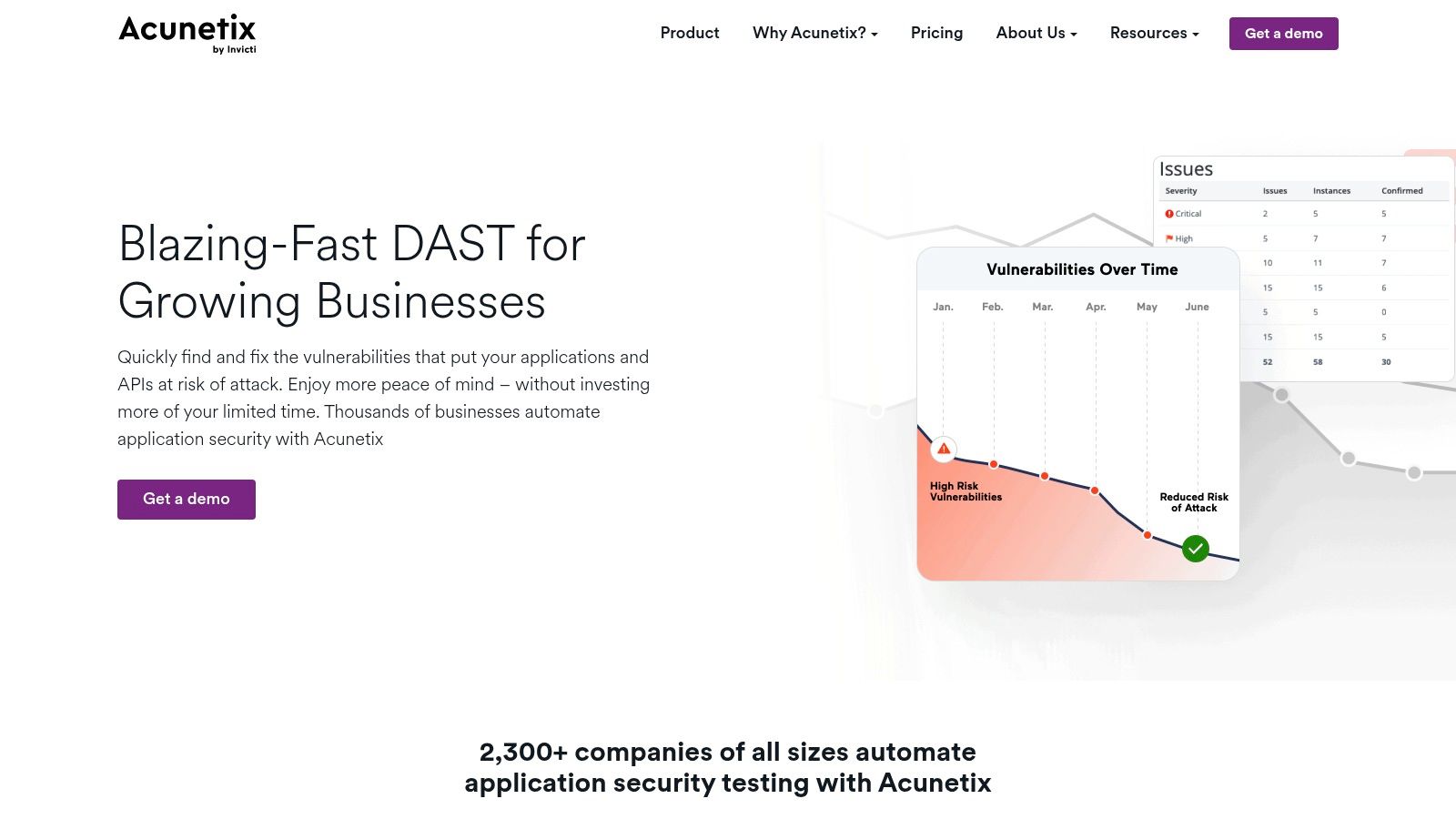
Acunetix, part of the Invicti security portfolio, offers a dynamic application security testing (DAST) solution focused on speed and accuracy. It’s designed for growing security teams and organisations looking to integrate security scanning into their development lifecycle without a steep learning curve. The platform provides a powerful engine for detecting a wide range of web vulnerabilities, making it a reliable piece of automated penetration testing software.
Its key differentiator is the combination of a fast scanning engine with technologies like AcuSensor (IAST) for proof-based verification, which helps reduce the time spent validating findings. This makes it particularly suitable for teams that need actionable results quickly to keep pace with rapid development cycles.
Key Features and Use Cases
Acunetix is built to provide comprehensive vulnerability scanning that integrates smoothly into existing DevOps workflows. It excels at scanning modern single-page applications (SPAs), APIs, and traditional web applications for thousands of vulnerabilities, including the OWASP Top 10.
- Proof-Based Scanning: Using its optional AcuSensor IAST agent, Acunetix can confirm a high percentage of vulnerabilities, providing line-of-code details and reducing false positives.
- DevOps Integration: The platform integrates with popular CI/CD tools like Jenkins, Azure DevOps, and GitLab, as well as issue trackers such as Jira, to automate the security feedback loop.
- Advanced Vulnerability Detection: The scanner is capable of detecting complex out-of-band vulnerabilities that many other automated tools miss, providing deeper security insights.
- Prioritisation and Reporting: Actionable reports and risk-based scoring help teams focus their remediation efforts on the most critical issues first.
Our Take: Acunetix strikes a great balance between speed, depth, and usability. It's an excellent choice for organisations moving beyond basic scanning to establish a mature, automated AppSec programme that aligns with modern development practices.
Pricing and Implementation
Acunetix operates on a quote-based pricing model, which depends on the number of target websites and applications you need to scan. To get specific pricing, you will need to contact their sales team directly. Implementation is straightforward and can be deployed on-premises or as a cloud solution, offering flexibility depending on your organisation's infrastructure and data governance requirements.
- Website: https://www.acunetix.com/
5. Rapid7 – InsightAppSec
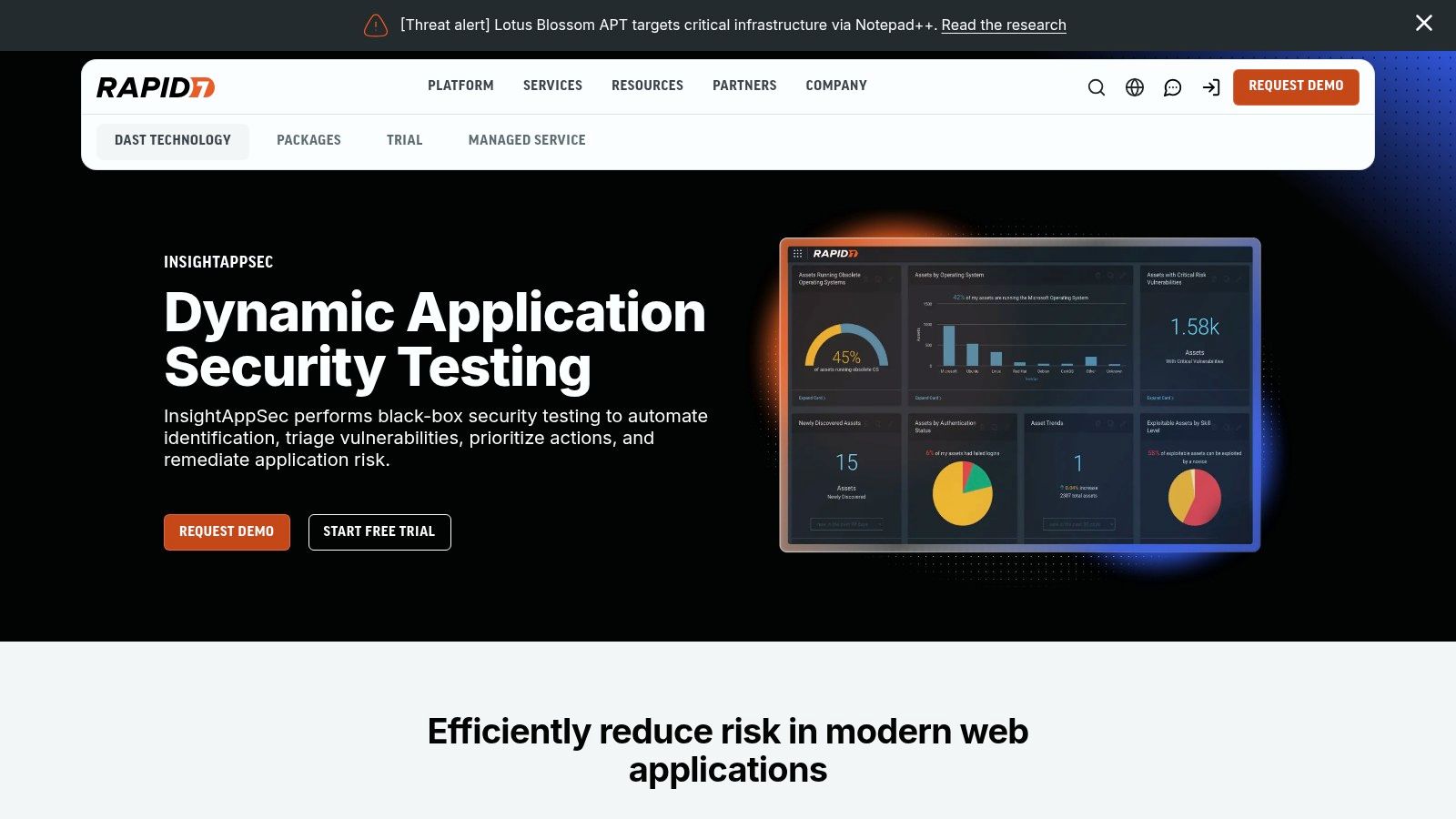
Rapid7's InsightAppSec is a cloud-native dynamic application security testing (DAST) solution designed for modern development environments. It helps organisations gain visibility into their application risk by automating the discovery and testing of web applications and APIs. This makes it a significant player in the automated penetration testing software market, especially for companies already invested in the broader Rapid7 ecosystem.
The platform is engineered to integrate into the software development lifecycle (SDLC), providing security feedback directly to developers. Its unique "Universal Translator" technology helps it understand the complex structures of modern single-page applications (SPAs) and APIs built with frameworks like React and Angular.
Key Features and Use Cases
InsightAppSec is built for DevSecOps teams who need to manage security across a large portfolio of applications without slowing down development. It is particularly effective for organisations that require both cloud and on-premises scanning capabilities.
- Universal Translator: This feature improves scanning accuracy for modern JavaScript frameworks and APIs by interpreting complex client-side logic and traffic.
- Attack Replay: Developers can use this to validate and replicate vulnerabilities found by the scanner, making remediation faster and more straightforward.
- Flexible Deployment: Utilise Rapid7's cloud engines for external-facing apps or deploy on-premises scan engines to test internal applications securely behind your firewall.
- CI/CD and ITSM Integration: Connects with popular tools like Jira, Jenkins, and Slack to automate scan triggers and ticket creation, embedding security directly into developer workflows.
Our Take: InsightAppSec is a strong, mature DAST solution that shines within the larger Rapid7 platform. Its focus on modern app technologies and developer-friendly validation tools makes it a compelling choice for enterprise-level DevSecOps programmes.
Pricing and Implementation
Rapid7 provides transparent pricing tiers based on the number of applications, starting from a package for 5 apps. While initial pricing is clear, custom enterprise packages often require direct engagement with the sales team to tailor the solution and integrate it with other Rapid7 products. Implementation is straightforward for the cloud version, while the on-premises engine deployment requires some internal infrastructure setup. A free trial is available to test its capabilities.
6. Tenable – Nessus / Tenable Web App Scanning
For teams already invested in vulnerability management, Tenable offers a familiar entry point into dynamic application security testing. Known primarily for its Nessus vulnerability scanner, Tenable extends its capabilities with Tenable Web App Scanning (WAS), a dedicated DAST solution. This makes it a pragmatic choice for organisations looking to consolidate their security tooling with an established vendor known for comprehensive infrastructure scanning.
Tenable’s strength lies in its transparent pricing and straightforward online purchase process, which is uncommon in the enterprise security software market. This allows smaller teams or departments to acquire powerful automated penetration testing software without lengthy sales cycles, addressing both network-level vulnerabilities and specific web application threats like the OWASP Top 10.
Key Features and Use Cases
Tenable is ideal for security and compliance teams needing a unified view of vulnerabilities across their entire IT estate, from servers to modern web applications and APIs. The platform is designed to provide broad coverage with minimal setup.
- Unified Vulnerability Management: Combine infrastructure scanning (with Nessus) and web application scanning (with WAS) under a single vendor, simplifying procurement and management.
- Comprehensive DAST Coverage: Tenable WAS is designed to identify critical web vulnerabilities, including SQL injection, Cross-Site Scripting (XSS), and insecure configurations in both traditional and single-page applications (SPAs).
- Pre-built Compliance Reporting: The platform includes templates for various compliance standards like PCI DSS, making it easier for organisations to generate the evidence required for audits.
- API Security Scanning: As APIs become more prevalent, Tenable provides dedicated scanning capabilities to uncover vulnerabilities in RESTful APIs, a critical component for mobile and modern web backends.
Our Take: Tenable provides a very accessible on-ramp to automated DAST, especially for teams already using Nessus for vulnerability assessment. Its clear, online purchasing options are a major advantage for businesses that prefer a self-service approach.
Pricing and Implementation
Tenable stands out with its transparent, SKU-based pricing available directly on its website. Nessus Professional and Expert are priced per scanner annually, while Tenable Web App Scanning is often priced based on the number of fully qualified domain names (FQDNs). Multi-year discounts and support add-ons are available at checkout. Implementation is cloud-based and straightforward, allowing teams to configure and launch scans quickly without managing on-premises infrastructure.
- Website: https://www.tenable.com/buy
7. Qualys – Web Application Scanning (WAS)
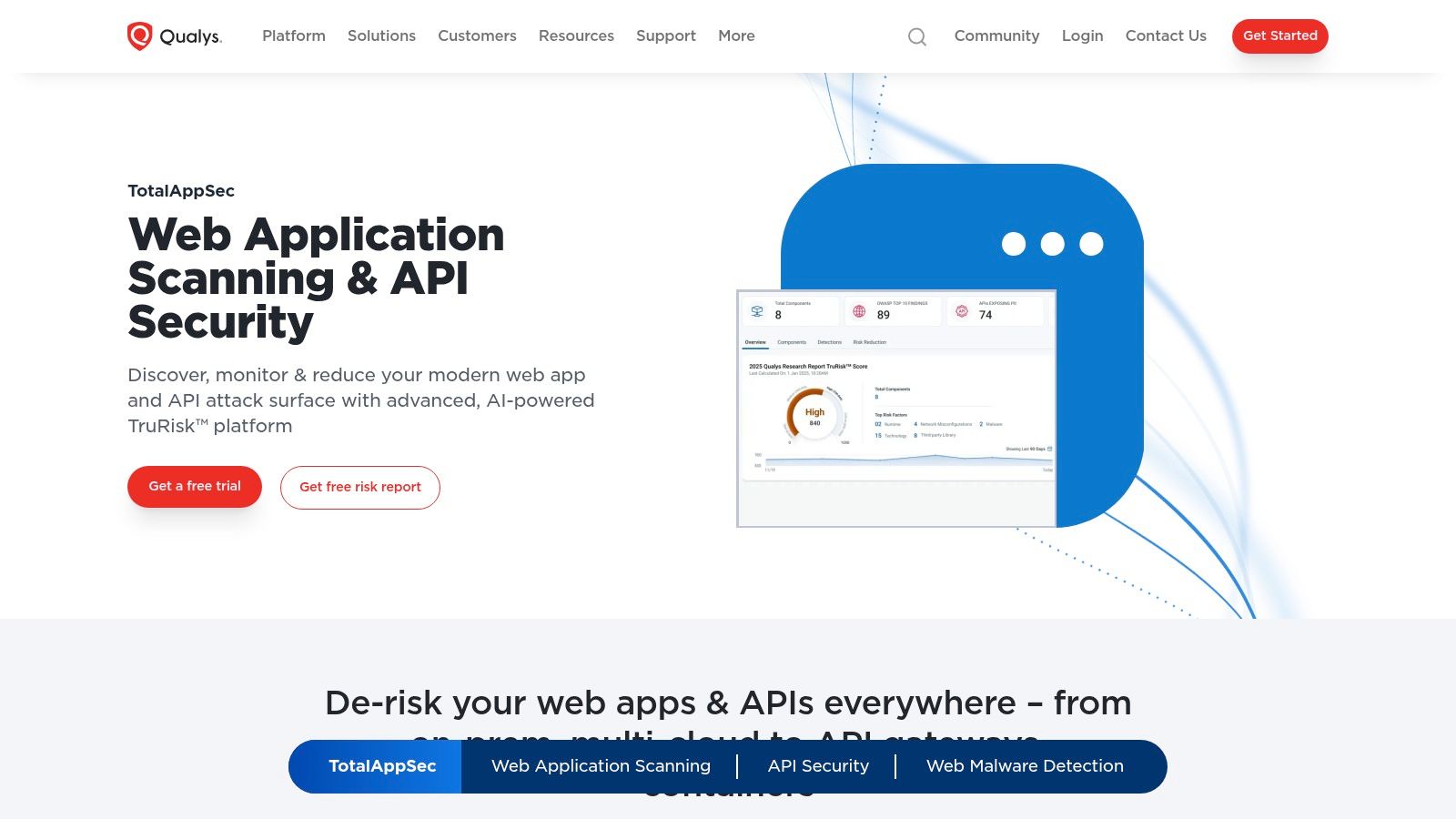
For organisations already embedded in the Qualys ecosystem for vulnerability management, Qualys Web Application Scanning (WAS) offers a tightly integrated DAST solution. It extends the Qualys Cloud Platform to cover web applications and APIs, providing continuous discovery, inventory, and automated testing. This makes it an efficient piece of automated penetration testing software for consolidating security vendors.
The platform is designed for enterprise scale, capable of discovering and cataloguing thousands of internal, external, and shadow web assets. By linking application vulnerabilities to its wider threat intelligence and risk data, it helps teams prioritise fixes based on real-world risk.
Key Features and Use Cases
Qualys WAS is most effective for large companies seeking a unified platform for infrastructure and application security. It brings a systematic, inventory-first approach to dynamic scanning.
- Continuous Discovery and Inventory: Automatically finds and catalogues web apps across your networks, including those unknown to security teams, creating a comprehensive asset list for testing.
- Comprehensive DAST and API Scanning: Tests for common vulnerabilities like the OWASP Top 10 and API Security Top 10, with capabilities to handle modern single-page applications (SPAs).
- Integrated Risk Prioritisation: Utilises Qualys TruRisk to score vulnerabilities, helping teams focus on the most critical threats impacting their specific environment.
- DevOps and CI/CD Integration: Offers plugins for tools like Jenkins and Bamboo, along with a robust API, to embed security testing directly into development pipelines.
Our Take: Qualys WAS is a powerful choice for existing Qualys customers. Its strength lies in its ability to unify web application security with broader vulnerability management, providing a single source of truth for risk across the entire organisation.
Pricing and Implementation
Pricing is quote-based and tailored to your environment, typically factoring in the number of web applications, IP addresses, and users. Subscriptions often include unlimited scans. Implementation is cloud-based, leveraging the central Qualys platform, which simplifies deployment as no on-premise servers are needed. However, the comprehensive nature of the platform can present a steep learning curve for smaller teams without dedicated security personnel.
8. Detectify – Application Scanning and Surface Monitoring
Detectify offers a unique combination of dynamic application security testing (DAST) and external attack surface management (EASM) in a single SaaS platform. It stands out by leveraging a private community of elite ethical hackers, the Detectify Crowdsource, to constantly feed new vulnerability research and payloads into its automated scanner. This makes it a compelling piece of automated penetration testing software for organisations wanting cutting-edge security checks without manual intervention.
The platform is designed to discover and test your entire internet-facing footprint, from known web applications and APIs to forgotten subdomains. This provides a holistic view of your external security posture, identifying potential entry points an attacker might exploit.
Key Features and Use Cases
Detectify is particularly well-suited for security-conscious teams that need continuous visibility of both their known applications and their unknown, shadow IT assets. Its strength lies in its research-led approach to automated testing.
- Surface Monitoring (EASM): Automatically discovers and monitors subdomains, identifying services and technologies running on them. It helps find forgotten assets or misconfigurations that expand your attack surface.
- Application Scanning: Performs in-depth DAST scans on web applications and APIs. It supports authenticated scanning to test logged-in functionality and includes advanced fuzzing to uncover complex vulnerabilities.
- Crowdsourced Research: New tests based on the latest vulnerabilities are added to the platform frequently, often within hours of public disclosure, keeping your scanning capabilities current.
- Cloud Integration: The platform can be procured directly through the AWS Marketplace, which simplifies billing and procurement for companies heavily invested in the AWS ecosystem.
Our Take: Detectify's combination of EASM and DAST, powered by its Crowdsource community, offers a powerful proactive security solution. It’s an excellent choice for teams that want to find not just the vulnerabilities they know about, but also the ones on assets they didn't know they had.
Pricing and Implementation
Detectify offers transparent pricing starting points on its website, including a 2-week free trial to evaluate the platform. The pricing model scales based on the number of scanning profiles (top-level domains) and API endpoints you need to test. Larger enterprise requirements necessitate a custom quote. As a SaaS platform, implementation is straightforward, involving domain verification and configuring your first scans.
- Website: https://detectify.com/pricing
9. StackHawk – CI/CD-native DAST
StackHawk is a developer-first dynamic application security testing (DAST) tool designed to run directly within CI/CD pipelines. Its core focus is on providing fast, deterministic security tests for APIs and microservices, making it a powerful piece of automated penetration testing software for modern development teams. The platform is engineered to shift security testing left, enabling developers to find and fix vulnerabilities before they reach production.
By integrating seamlessly into the pull request and build process, StackHawk delivers immediate security feedback where developers are already working. This approach is ideal for organisations practising DevOps and aiming for a high level of automation in their security processes.
Key Features and Use Cases
StackHawk excels in environments where speed and developer experience are paramount. It is particularly effective for testing the complex, API-driven backends common in today's applications, including those built on Firebase or Supabase.
- API Security Testing: Provides strong support for modern API technologies, including REST, GraphQL, SOAP, and gRPC, and handles complex authentication flows.
- Developer-Centric Workflow: Scans are configured as code (
stackhawk.yml) and run in pipelines, with results sent directly to Slack, Jira, or GitHub, fitting naturally into existing developer tools. - Attack Surface Discovery: Can discover your application's attack surface from source code and offers AI-assisted remediation advice to help developers fix issues quickly.
- Pre-Production Gates: The speed of the scans makes it feasible to use StackHawk as a quality gate, failing a build if critical vulnerabilities are discovered. This enforces a proactive security posture.
Our Take: StackHawk is built for the modern software development lifecycle. Its tight integration with CI/CD and strong API focus make it an excellent choice for teams that want to embed security testing directly into their build and release processes, aligning with the principles of continuous penetration testing.
Pricing and Implementation
StackHawk’s pricing is primarily based on the number of contributing developers, a model that might be unfamiliar but is designed to scale with your team. Annual billing minimums and team-size floors may place it out of reach for very small startups. It is also available via the AWS Marketplace, which can simplify procurement and billing for companies invested in the AWS ecosystem. Implementation is straightforward, involving the addition of the scanner to your CI/CD configuration file.
- Website: https://www.stackhawk.com/
10. Pentera – Automated Security Validation
Pentera offers an automated security validation platform that moves beyond traditional vulnerability scanning to emulate real-world attack techniques. It safely executes attack paths across an organisation's entire IT estate, including internal networks, endpoints, and cloud environments, to provide a true measure of exploitable risk. This makes it a powerful piece of automated penetration testing software for enterprises wanting to continuously validate their security posture.
The platform is designed to answer a critical question for security leaders: "Can an attacker breach our defences?" It autonomously maps and tests potential kill chains, providing clear, evidence-based reports that prioritise remediation efforts based on actual business impact.
Key Features and Use Cases
Pentera is best suited for mature organisations looking to replace periodic, manual testing with continuous, automated validation of their entire security programme. It focuses on the whole attack surface, not just web applications.
- Continuous Security Validation: The platform runs autonomously and continuously, testing your defences against the latest adversary tactics and techniques without causing production disruption.
- Attack Path Visualisation: It provides clear visual maps of exploitable attack paths, showing how a threat could move from an initial foothold to critical assets.
- Prioritised Remediation: Findings are backed by proof-of-exploit, allowing security teams to focus on fixing vulnerabilities that pose a tangible threat, not just a theoretical one.
- Executive Reporting: Generates high-level reports that translate technical risk into business impact, making it easier to communicate security posture to stakeholders and justify investments.
Our Take: Pentera excels at demonstrating real-world risk across a complex enterprise environment. It bridges the gap between vulnerability scanners and manual penetration tests, offering a scalable way to continuously challenge and validate security controls from an attacker's perspective.
Pricing and Implementation
Pentera is an enterprise-grade solution with quote-based pricing. The cost is significant and typically depends on the size and complexity of the environment being tested. Implementation involves deploying the Pentera platform within the network, which then discovers and tests assets autonomously. The process is designed for rapid value, often showing results within days. This approach is quite different from focused application scanning, offering insights into how services like web applications fit within the broader security landscape, much like the difference between automated and manual pentesting methodologies.
- Website: https://pentera.io/
11. NowSecure – Automated Mobile App Security Testing / PTaaS
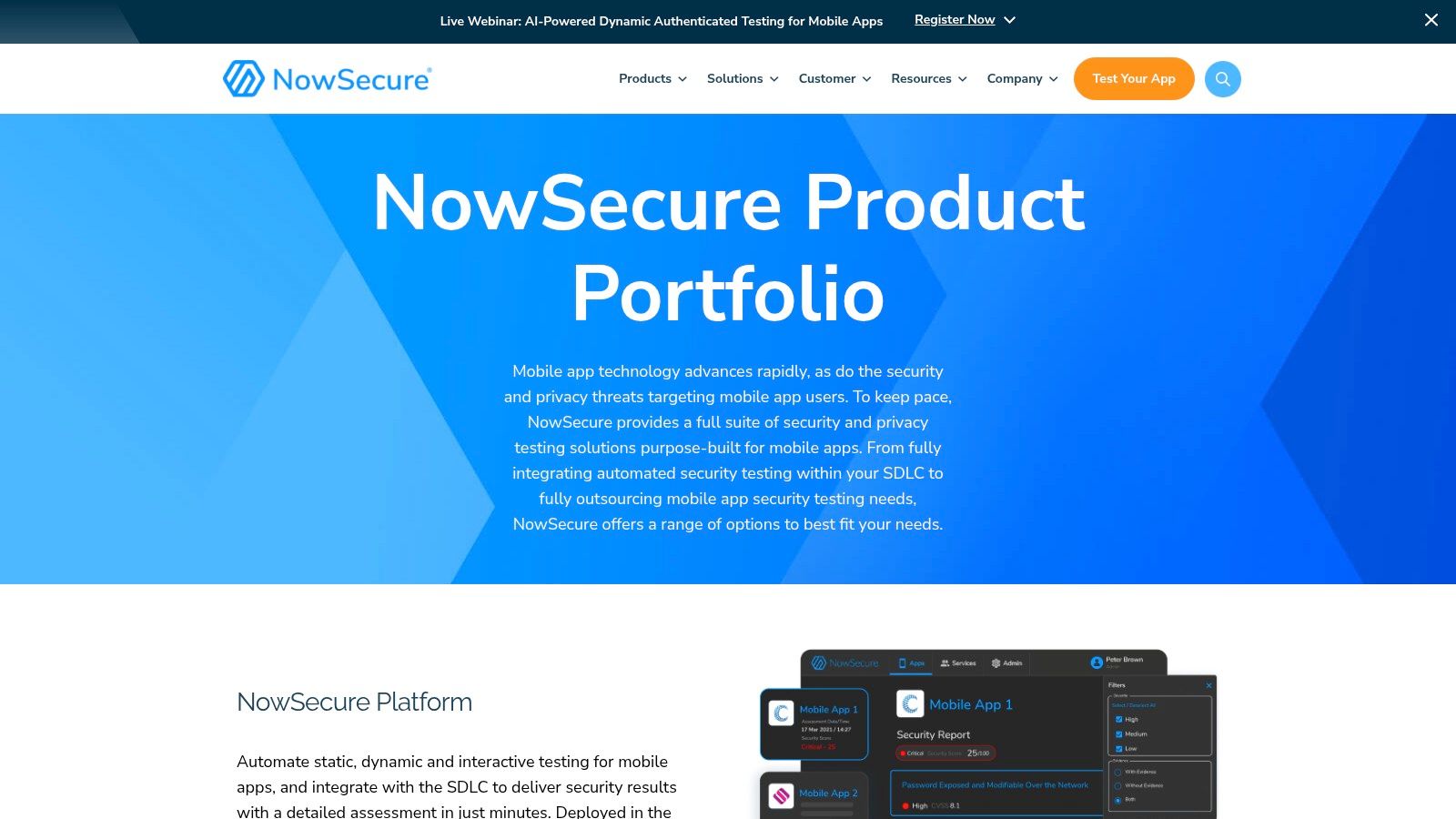
For development teams focused exclusively on iOS and Android applications, NowSecure offers a purpose-built platform that combines automated SAST, DAST, and IAST with human-led services. It addresses the unique security challenges of mobile environments, from insecure data storage to API vulnerabilities, making it a critical piece of automated penetration testing software for mobile-first organisations.
The platform is designed for speed, integrating directly into mobile development lifecycle tools like GitHub, Azure DevOps, and Jira. This ensures security checks are a seamless part of the build and release process, providing rapid feedback to developers without slowing down release cycles.
Key Features and Use Cases
NowSecure is ideal for DevOps teams shipping frequent mobile app updates and needing continuous security assurance. Its hybrid approach, blending automation with expert analysis, caters to both high-speed testing and deep-dive assessments.
- Mobile-Specific Analysis: The tooling is built from the ground up to analyse compiled mobile app binaries (IPA/APK), identifying vulnerabilities specific to mobile OS behaviour and supply chain risks.
- CI/CD Integration: Automatically trigger security tests on every build, ensuring developers receive immediate, actionable findings within their existing workflows.
- Penetration Testing as a Service (PTaaS): Complements automated scanning with on-demand access to human penetration testers for more complex analysis, meeting compliance requirements like MASVS.
- Supply Chain Security: Scans for vulnerabilities within third-party SDKs and libraries, a common and often overlooked attack vector in mobile apps.
Our Take: NowSecure is the go-to solution for teams where mobile is the primary business channel. Its dedicated focus provides a level of depth on iOS and Android that general-purpose DAST tools cannot match, effectively securing the entire mobile app attack surface.
Pricing and Implementation
NowSecure offers its services through various marketplaces, including AWS, providing transparent pricing for one-year contracts and different service tiers. Pricing is typically based on the number of apps you need to test. Implementation is cloud-based, requiring configuration of CI/CD pipeline plugins or API integrations to submit builds for automated analysis, making setup relatively straightforward for DevOps teams.
- Website: https://www.nowsecure.com/products/
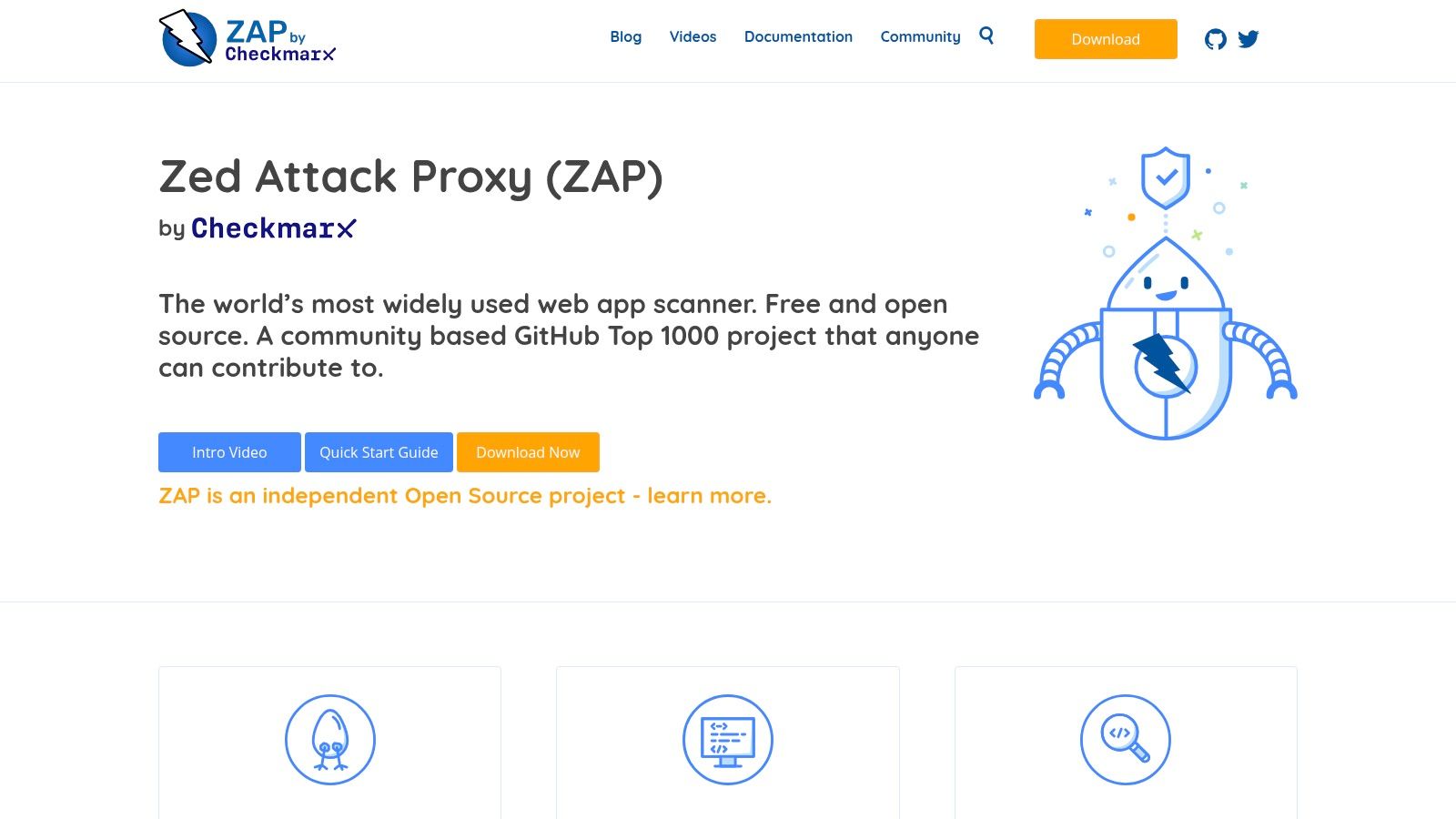
12. ZAP by Checkmarx (OWASP ZAP)
As one of the world's most popular free security tools, the Zed Attack Proxy (ZAP) is a cornerstone of open-source security testing. Maintained by Checkmarx, ZAP provides powerful DAST capabilities for finding vulnerabilities in web applications. It serves as an excellent starting point for teams looking to introduce security scanning into their development lifecycle without initial budget commitments, making it a foundational piece of automated penetration testing software.
ZAP can be used as a traditional proxy for manual testing, but its real power in an automated context comes from its daemon mode and extensive API. This allows it to be integrated directly into CI/CD pipelines, offering a flexible, scriptable, and highly extensible scanning engine that can grow with a team's needs.
Key Features and Use Cases
ZAP is ideal for developers, QA testers, and security teams who want a no-cost, highly customisable scanner. It is particularly effective for automated scanning in DevOps environments.
- CI/CD Integration: Official Docker images and a powerful API make it straightforward to embed ZAP into Jenkins, GitLab CI, or GitHub Actions for automated baseline and full scans.
- Extensible via Add-ons: A marketplace of add-ons provides additional scan rules, advanced functionality like WebSockets support, and integrations with other tools.
- Multiple Scanning Modes: Features an automated scanner for quick checks, a traditional spider for mapping applications, and an AJAX Spider to handle modern JavaScript-heavy sites.
- Scripting Support: ZAP can be extended with scripts written in multiple languages, allowing for custom scan logic and tailored attack patterns.
Our Take: ZAP is the quintessential open-source DAST tool. Its strength lies in its flexibility and massive community support. While it may require more configuration to reduce false positives compared to commercial rivals, its value for pipeline automation is undeniable.
Pricing and Implementation
ZAP is completely free and open-source under the Apache 2.0 licence. Implementation can range from a simple desktop installation for manual testing to a fully containerised, headless deployment within a CI/CD pipeline. Success with ZAP often depends on investing time to create scan policies and tuning context files to suit your specific applications.
- Website: https://www.zaproxy.org/
Automated Penetration Testing: 12-Tool Comparison
| Product | Core features ✨ | Target audience 👥 | Value & pricing 💰 | Quality / Rating ★ | |---|---|---:|---:|---:| | AuditYour.App 🏆 | ✨ Instant URL/IPA/APK scans; RLS logic fuzzing; mobile decompilation; AI-assisted findings + SQL remediation | 👥 Indie hackers, startups, mobile teams, CTOs, platform engineers | 💰 $49 single snapshot; $29/mo Continuous Guard; $499 Expert Review; downloadable certs | ★★★★★ | | PortSwigger – Burp Suite DAST (Enterprise) | ✨ Burp scanner engine; scheduled & CI scans; RBAC & BApps extensibility | 👥 Large AppSec teams & enterprises | 💰 Quote-based enterprise pricing (sales engagement) | ★★★★★ | | Invicti – Application Security Platform | ✨ Proof-based DAST + auto-validation; API discovery; centralized risk view | 👥 Enterprise AppSec, security ops, large portfolios | 💰 Contract-based pricing; enterprise sales cycle | ★★★★★ | | Acunetix – DAST | ✨ Fast web/API scans; predictive risk scoring; AcuSensor IAST | 👥 Growing businesses & DevOps teams | 💰 Quote-based; part of Invicti ecosystem | ★★★★☆ | | Rapid7 – InsightAppSec | ✨ Modern-app translators; Attack Replay; cloud/on‑prem engines | 👥 DevSecOps teams, Rapid7 customers | 💰 Clear entry pricing guidance; add-ons affect TCO | ★★★★☆ | | Tenable – Nessus / WAS | ✨ Nessus VA + Tenable WAS; compliance policies & reporting | 👥 Security/compliance teams | 💰 Transparent online SKUs; instant purchase options | ★★★★☆ | | Qualys – Web App Scanning (WAS) | ✨ Continuous discovery & inventory; TruRisk prioritization; CI/CD integrations | 👥 Organizations on Qualys platform & large estates | 💰 Quote-based platform pricing; can be complex | ★★★★★ | | Detectify – App Scanning & Surface Monitoring | ✨ Crowdsourced checks; EASM + authenticated DAST; frequent updates | 👥 SMBs to enterprises wanting external surface monitoring | 💰 Transparent starting prices; AWS Marketplace offers | ★★★★☆ | | StackHawk – CI/CD-native DAST | ✨ Deterministic runtime tests in CI/PRs; strong API/auth support | 👥 Developer teams, API/microservice owners | 💰 Contributor pricing; AWS Marketplace; annual minimums | ★★★★☆ | | Pentera – Automated Security Validation | ✨ Production-safe attack emulation; kill-chain mapping; exec reporting | 👥 Large enterprises needing whole‑estate validation | 💰 Quote-based enterprise; higher TCO | ★★★★☆ | | NowSecure – Mobile AppSec / PTaaS | ✨ Mobile-focused DAST/IAST/SAST + PTaaS; CI/CD integrations | 👥 Mobile app teams requiring dedicated mobile testing | 💰 Marketplace SKUs for 1yr; PTaaS pricing varies | ★★★★☆ | | ZAP by Checkmarx (OWASP ZAP) | ✨ Open-source DAST: spiders, fuzzing, add-ons, headless/docker modes | 👥 Devs & security teams wanting free, extensible scanner | 💰 Free OSS; community support; integrations need tuning | ★★★☆ |
Making Your Choice: A Practical Framework
Navigating the crowded market for automated penetration testing software can feel overwhelming, but the journey becomes much clearer when you anchor your decision in your specific needs, team structure, and technology stack. As we've explored, there is no single "best" tool; instead, there is only the right tool for the right job at the right time. The key is to move from a generic search for a solution to a specific diagnosis of your security gaps and workflow requirements.
A common pitfall is chasing the tool with the longest feature list or the most prominent brand name, only to find it's a poor fit for your development culture. An enterprise-grade platform like Invicti or Rapid7, while powerful, can be overkill and prohibitively expensive for a lean startup. Conversely, a free, open-source tool like OWASP ZAP, while flexible, may lack the specialised focus and support needed to secure modern backends like Supabase or Firebase efficiently.
Key Takeaways and Strategic Selection
Your selection process should begin with a clear-eyed assessment of your primary objective. This self-assessment is the most critical step in choosing the right automated penetration testing software.
-
For the Modern Indie Hacker & Startup: If your core infrastructure relies on Backend-as-a-Service (BaaS) platforms, your biggest risks often lie in misconfigurations rather than traditional web vulnerabilities. A specialised tool like AuditYour.App is purpose-built for this reality. It bypasses the complexity of general-purpose DAST scanners to deliver immediate, actionable insights for Supabase and Firebase, making it the most direct and cost-effective path to securing your backend.
-
For the DevOps-Centric Team: When security needs to be a seamless part of your CI/CD pipeline, your focus should be on developer-first tools. StackHawk excels here, integrating directly into your existing workflows to scan APIs and microservices with every build. This approach shifts security left, empowering developers to find and fix issues long before they reach production.
-
For the Mature Enterprise Programme: If you're managing a diverse portfolio of legacy and modern web applications, you need a solution built for scale, governance, and comprehensive reporting. Powerhouses like Burp Suite Enterprise, Qualys WAS, and Tenable provide the centralised management, advanced scanning capabilities, and detailed compliance reporting that large organisations require.
-
For Mobile-First Development: When your primary delivery channel is an iOS or Android app, your testing needs are fundamentally different. A mobile-specific solution like NowSecure is essential for analysing the unique attack surfaces of mobile applications, from insecure data storage to risky third-party SDKs.
Implementing Your Security Strategy
Remember, automation is not a replacement for a security-conscious culture, but a powerful enabler of it. The most effective approach is often a layered one. You might use AuditYour.App for continuous, targeted monitoring of your Supabase project's Row Level Security, while also running StackHawk in your pipeline to check for API vulnerabilities, and occasionally engaging a manual penetration tester for deep-dive analysis.
The goal is to create a security ecosystem where automated tools handle the repetitive, high-volume checks, freeing up your team to focus on complex logic flaws and architectural improvements. Start small, target your most significant and immediate risks, and choose the automated penetration testing software that integrates most naturally into the way your team already works. By doing so, you transform security from a bottleneck into a business accelerator, enabling you to build and ship with confidence.
Ready to secure your Supabase or Firebase project in minutes, not weeks? AuditYour.App provides the specialised, no-setup automated penetration test you need for modern BaaS platforms. Get your first audit today and find critical misconfigurations before attackers do.
Scan your app for this vulnerability
AuditYourApp automatically detects security misconfigurations in Supabase and Firebase projects. Get actionable remediation in minutes.
Run Free Scan